Importers who receive consistent, on-spec produce shipment after shipment rarely got there by luck. They use a clear checklist before they place the first order. Each check below tells you how a fruit and vegetable exporter will perform in quality, timing, paperwork, and price once the contract is signed.
Egypt is one of the world’s leading sources of citrus, potatoes, onions, grapes, strawberries, and pomegranates, so buyers have plenty of choice. This guide walks through the seven checks that separate a dependable partner from an average one.
1. Food Safety Certifications and Compliance
Certifications are the fastest way to see whether an exporter’s farms and packing houses follow recognized standards. Look for:
- GlobalG.A.P. for good agricultural practices on the farm
- HACCP or ISO 22000 for food safety management in packing and handling
- BRCGS or IFS for packing houses supplying retailers
- SMETA or GRASP for ethical and social audits, which many supermarkets now require
Ask for copies of current certificates, and check that the scope covers the products you want to buy. A certificate for one crop or one farm does not automatically cover everything the exporter sells.
Also ask about pesticide residue management. Markets such as the EU enforce strict maximum residue limits (MRLs), and a reliable fruit and vegetable exporter should be able to show lab test reports from accredited laboratories.
2. Product Quality, Grading, and Specifications
“Good quality” means little until it is written down. A professional exporter will agree a specification sheet with you before shipping, covering:
- Size range or caliber (for example, orange sizes in millimeters)
- Color, sugar level (Brix) or firmness, where relevant
- Permitted defect tolerance
- Class (Class I, Class II, or your own standard)
- Shelf-life expectation on arrival
Ask whether the exporter grades and sorts in-house and whether it uses optical sorting or manual inspection. Request photos of actual production lots, not stock images, and ask for pre-shipment inspection by a third party such as SGS, Bureau Veritas, or Intertek if your contract is large.
3. Cold Chain, Packing, and Shipping Capability
Fresh produce can lose value quickly between the farm and your warehouse. Cold chain discipline is what protects it. Ask the exporter how they manage:
- Pre-cooling after harvest, to remove field heat quickly
- Temperature-controlled storage at the packing house
- Reefer containers set to the right temperature and ventilation for each crop
- Data loggers inside the container so you can check the temperature history on arrival
Packing matters as well. Carton strength, liners, pallet configuration, and labeling all affect how produce travels. Ask what packaging options are available, whether private-label or custom cartons are possible, and how pallets are secured for long sea transit.
Find out which Egyptian ports the exporter ships from, which shipping lines they work with, and typical transit times to your destination. A fruit and vegetable exporter that books reefer space in advance during peak season is far less likely to cause delays.
4. Seasonal Availability and Supply Capacity
Every crop has its own window, and a serious exporter will explain it openly rather than promise everything all year. As a rough guide, Egypt’s main seasons run like this:
| Product | Typical Season |
|---|---|
| Oranges and other citrus | Late autumn to early summer |
| Strawberries | Winter to early spring |
| Potatoes | Winter to early summer, with storage stock later |
| Onions | Spring to summer, with storage stock later |
| Grapes | Late spring to late summer |
| Pomegranates | Late summer to late autumn |
Exact dates vary by variety, region, and weather, so ask for a current availability calendar.
Then test capacity. Ask how many containers per week the exporter can supply consistently, whether they grow on their own farms or rely on contracted growers, and what happens if a harvest is smaller than expected. A fruit and vegetable exporter with a wide grower network can usually replace volume faster than one depending on a single farm.
5. Export Experience and Documentation
Incomplete paperwork can hold a container at the port for days. Confirm that the exporter can prepare and deliver on time:
- Commercial invoice and packing list
- Phytosanitary certificate issued by the Egyptian authorities
- Certificate of origin, and EUR.1 where it applies to trade with the EU
- Health or quality certificates required by your country
- Bill of lading and any additional import permits
Ask which countries the company already exports to. Experience with your market means fewer surprises around labeling rules, residue limits, and customs procedures. References from existing buyers, or a short call with one of them, are a strong signal.
Also agree the trade terms clearly. Whether you buy on FOB, CFR, or CIF terms decides who carries the cost and risk at each stage, so make sure both sides read them the same way.
6. Traceability and Farm Sourcing
Traceability means being able to follow a carton back to its farm, harvest date, and packing line. It matters for food safety, and it makes any quality question much easier to resolve.
Ask whether cartons carry lot codes, whether harvest and packing dates are recorded, and whether the exporter keeps records you can review. If you supply retailers, this is often a contractual requirement, so check it before you commit.
If possible, visit the farms and packing house, or ask for a live video walkthrough. Watching how produce is harvested, sorted, and packed tells you more than any brochure.
7. Communication, Pricing Transparency, and Payment Terms
The day-to-day experience of working with an exporter shapes the relationship as much as the produce does. Watch for:
- Response time: Are questions answered clearly and quickly?
- Quotation clarity: Does the price state the product, size, packaging, quantity, and Incoterm?
- Honest updates: Will the team tell you early if weather or supply affects your order?
- Sample policy: Can you test a sample shipment or a trial order before scaling up?
For payment, typical options include a deposit with the balance against documents, or a letter of credit for larger contracts. Be careful with prices far below the market. They often signal lower grades, hidden charges, or unreliable supply.
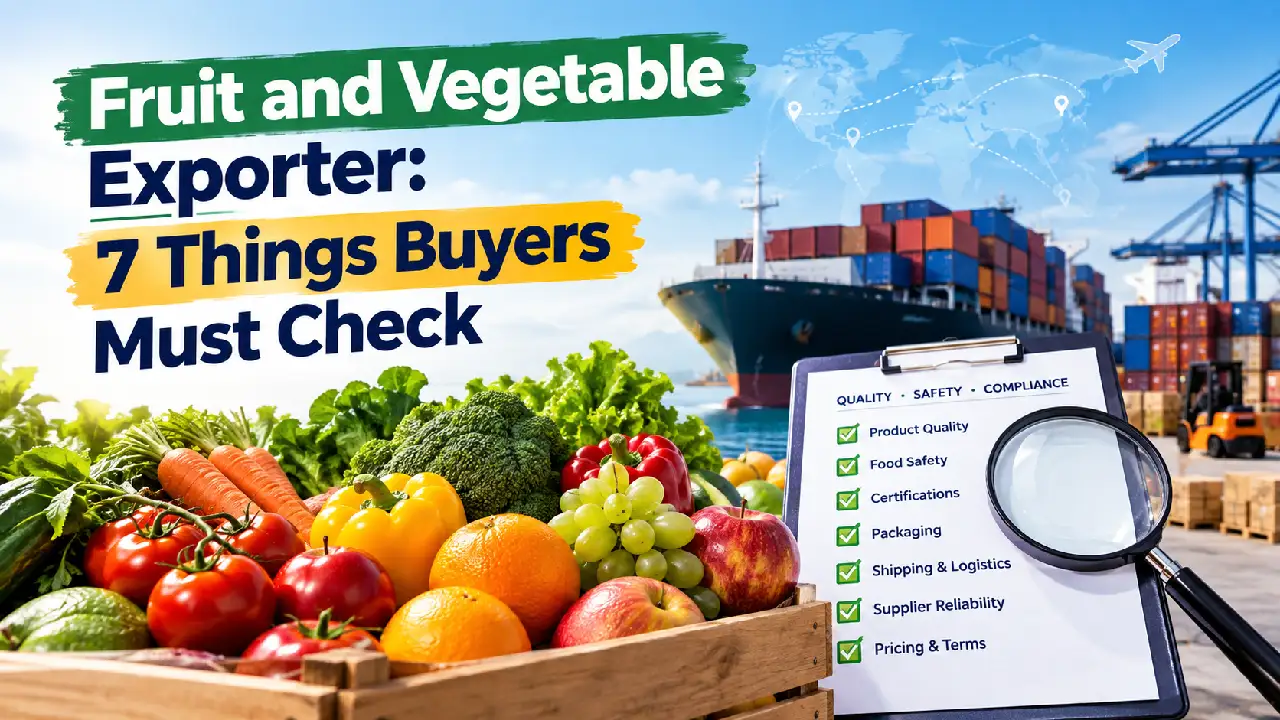
Quick Checklist Before You Order
Before you confirm a supplier, make sure you can answer yes to these:
- Are the certificates current and relevant to your product?
- Is there a written specification and sample approval process?
- Is the cold chain documented from harvest to loading?
- Does the seasonal calendar match your buying schedule?
- Can the exporter deliver all documents your market requires?
- Can you trace a carton back to its source?
- Are the price, terms, and communication clear?
Start Sourcing Fresh Produce from Egypt
If you are looking for a fruit and vegetable exporter in Egypt that can match your specifications, volumes, and shipping schedule, Zona Fresh is ready to help. Share the products you need, your destination market, and your preferred packaging, and request a quotation and sample details today.
Frequently Asked Questions
How do I verify that a fruit and vegetable exporter is legitimate?
Ask for the company’s commercial registration and export license, current food safety certificates, and references from existing buyers. Confirm the company’s address and contact details, request photos or video of real packing operations, and consider a third-party inspection or a site visit before placing a large order. Starting with a small trial shipment also reduces risk.
What is the minimum order quantity when buying from an exporter?
It depends on the product and the shipping method. Most exporters sell by the full container, typically a 40-foot reefer, because it is the most cost-effective way to ship fresh produce. Some exporters can combine different products in one container or arrange smaller trial orders, so ask about flexibility when you request a quotation.
Which documents do I need to import fresh fruits and vegetables?
You will usually need a commercial invoice, packing list, phytosanitary certificate, certificate of origin, and bill of lading. Some markets also require health certificates, residue test reports, or special import permits. Requirements vary by country, so check with your local customs broker or food authority and share the list with your exporter before shipment.